I'm participating in Shallee McArthur's
What's Your Process Blogfest. There's about 35 bloggers participating, so check it out. You're sure to find some good ideas.
I'm going to cover my process in three phases, pre-manuscript, manuscript, and post-manuscript. I'm on my fifth or sixth manuscript, so my process is still evolving. But, what I've been doing does seem to be working for me.
Pre-manuscript
One thing I've learned is don't bother writing unless you've got a great idea. For me, the idea part isn't too hard (it's the execution that I have to work at). The toughest part is is coming up with a big idea that I'll
love to write. For me, if I don't fall in love with the story and the characters, there's no use.
However, even if I love the idea, if it isn't going to sell, I'm not going to write it. I have too many hard drive novels, as do most writers I know. My advice is not to bother writing quite books, manuscripts about talking animals, or whatever agents aren't buying right now.
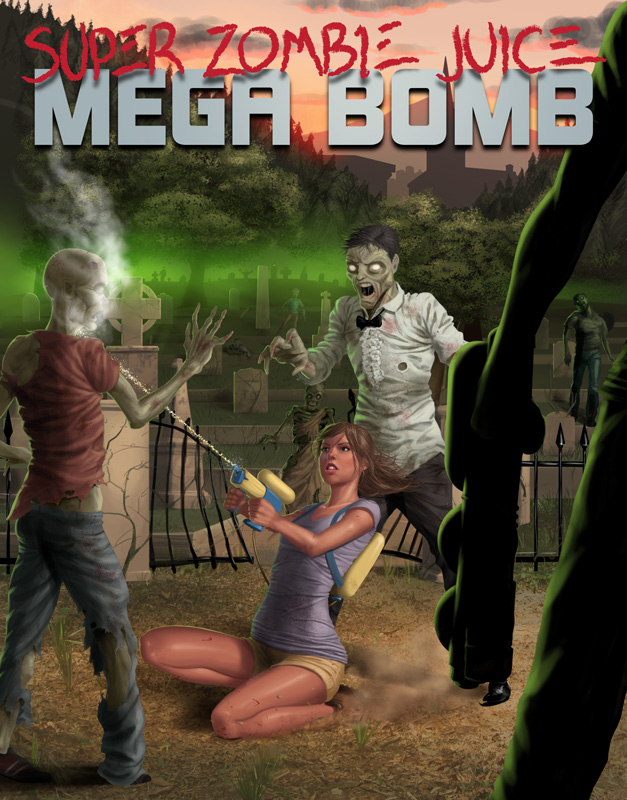
In fact, I try to come up with the hook before I write my first word. What's a hook? Two kids fight off an army of the undead, armed with nothing but Super Soakers--that's a hook (from my most recent novel). It's what you're going to tell that agent you run into in the elevator, on your way back to your room, at your next conference. It's what's going to appear on the jacket cover to make kids go, Wow, I've gotta get this book. If you idea doesn't have one, don't bother.
Next, I layout the story. Here I use a step sheet. Basically, I just start a word document with a step-by-step for the story. Here's short an example:
Dude moves to new town.
Meets a girl.
Falls in love with Girl.
Turns out Girl hunts vampires.
Just one problem, Dude's a vampire.
Okay, so that's a plot from Buffy, but you get the idea. Mine are usually about 200-400 words by the time I'm done. I'll also work out the subplots and key scenes in the step sheet. That way, I'm never lost when writing my manuscript, as all I have to figure out is how do they get from one step to the next.
Before I start writing I have one more step. It's the most important pre-manuscript step (for me). I call it falling in love with my characters. It's where I get to know them. There's lots of ways I do this. Here's just a few:
Do an interview. Start writing out some questions and type out the character's responses. This is a great way to get a background for each character and makes getting each one's voice down a lot easier. You'll probably even end up using a few lines from this in your manuscript.
Write a short with your characters. It's a great way to get to know them and see how they'll react to stress. Several times I've taken parts of my short stories and plugged them right into the novel. Plus, if I really work the short (which for me is about a dozen edits) I really have each character down by the time I'm finished.
Play it out in your mind. This works great if you have an active imagination. Approach it like meditation. Sit in a quite place where you are not going to be interrupted (I know, that's easier said then done), and keep a pen and notebook handy. Then close your eyes and imagine your characters. I often approach this like a movie--especially if I've hit a roadblock or dead-end. I start right at the beginning of my story (or even before the beginning) and walk right through it. When I get to the point where I'm stuck, usually the characters just continue with the story for me.
Which is one of the reasons to keep a notebook handy; so you can write down whatever creative solutions to your plot problems that may come up. Plus, you'll also find sometimes your characters deliver the perfect line of dialog without any help from you (write these down right away so you don't forget them).
I often use this process during the writing process as well. And I always keep an eye out for anything that doesn't feel right, or new characters that pop-up on their own, stuff like that.
Manuscript
As you can see, it sounds like I don't really begin writing until I really have the groundwork laid.
While this is usually true, I often come up with a story idea and just want to start writing. Fine, I do it. I just go back after I've exhausted my inspiration and do the prep work then. I find what I initially write usually doesn't make it into the story anyway and end up just doing more prep work.
Actually writing the manuscript is (usually) the easiest part for me. That's not just because I've done some of the leg work up front. It's also because if I don't feel inspired, I'll simply muscle my way through it. In my opinion, there's plenty of time to get it perfect later. Right now, I just get the words down.
I don't worry about making it perfect. I don't make sure my grammar is correct. If I can't think if a word, I'll leave a few underscores and put a synonym or two behind them to remind me what I was thinking when I re-read it later on.
Yes, I sometimes go through later and delete entire scenes because they stink. So what? As long as the final product is my best work, I'm fine.
Here's another trick I use while writing the manuscript. For me, each time I sit down to continue a manuscript getting started is the hardest part. I have to re-read a little just to figure out where I've left off and then hope I can get back into the groove of things.
Instead, what I do, is edit everything I wrote the day before. I'm not perfecting the prose here. Just obvious errors, filling in the missing words, etc. By the time I've done a quick edit on everything I wrote the night before, I'm almost always ready to start writing again--it just gets me back in the story.
Post-manuscript (aka Revision or to some, Hell)
This is where most writers make it or break it. For me, it's where I spend most of my time (I'm talking months and months). As I said before I'll go over a short story a dozen times. Same for a manuscript, maybe even more. The difference is each edit takes days or weeks.
Depending on how I am feeling, I'll either dig right into the editing, or I'll take a week or two off. But no matter what, at some point, I'll take weeks probably more like a month to let the manuscript sit before I come back to it. This really helps me look at it with new eyes and I see all types of stuff I missed before.
At some point I'll print my manuscript out and edit it on paper. I also like to feed it into my Kindle and have it read it back to me. Both these methods really help me find errors, bad dialog and other stuff I just always seem to miss when editing on a computer screen.
It takes me 8-10 edits before the manuscript is read to show to a beta. I try to get at least 4 trusted betas. If I get two saying the same thing, I'll sit on their feedback for a few days before deciding if they are right or not. If I don't wait a few days, I can't look at their comments objectively. Then, when it turns out their comments are right (they almost always are), I'll rewrite and send out to a couple more betas.
Finding a good beta reader is hard. Most of mine only do manuscript exchanges (so they have to have something for me to edit at the same time). However, I can always find someone I know to do a partial beta. These are helpful if used right. Obviously, they can provide feedback on the first 3 or 4 chapters, or say, the ending. But I'll also use them for key scenes. I'll take a paragraph or two for some back story, tell the beta reader what I'm aiming for and see if they feel I've nailed it.
Once I'm convinced my manuscript is perfect, I set it aside for a month, maybe more. I can work on other projects, or on the query letter during this time (not the synopsis though). I just don't want to open or look at it at all during that time. When giving it a final reading, I try to imagine I'm reading it for the first time. This works great for finding inconsistencies and small plot holes.
Wow, I think that's my longest post to date. If you got this far, I hope you found something I said useful and will be able to incorporate it into your own process. If you have any tidbits to add, just post a comment. Heck, maybe even write up a post on your own process.